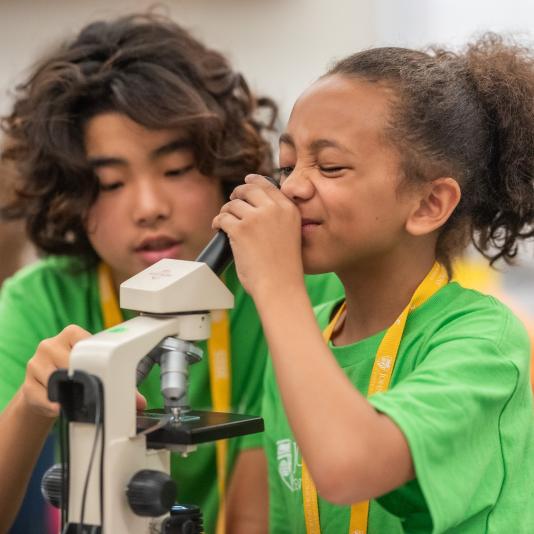

About the Course
From microscopic investigation to the basics of veterinary medicine, this course explores the principles of comparative animal anatomy, physiology, and genetics. You will learn key concepts of zoology such as characteristics of the animal cell, heredity, taxonomy, and evolution, including natural selection. Through laboratory dissections of animals ranging from perch to rats, you'll explore the different systems of each species,digestive, nervous, immune, endocrine, reproductive, and circulatory. You and your classmates will research and discuss topics including animal behavior, environmental adaptation, husbandry and domestication, and the human impact on animal life,including environmental degradation and species extinction. Through lab work and in the field, you'll put science into practice by learning to formulate research questions, gather and analyze data, and interpret results.
Typical Class Size: 18-20
Learning Objectives
- Justify that animals have evolved organ systems that sense and process external information that is used to facilitate and enhance survival, growth and reproduction
- Defend the statement that Heritable information provides for continuity of life" by constructing a framework of hereditary concepts including that while some traits are determined by the actions of single genes, most traits result from the interactions of multiple genes or interactions between genes and the environment, and these traits often exhibit a spectrum of phenotypic properties that allow for a wider range of observable traits, including weight, height and coat color in animals
- Prove that the nervous system is evolutionarily conserved, relate the features of an organism's nervous system to another body system to ensure homeostasis for the organism
- Produce a visual representation or model connecting external factors in the environment that impacts on heritability and lastly evolution
- Illustrate three examples of human activities impacting on ecosystems and populations of animals that can lead to biodiversity loss, habitat destruction, invasive species, bioaccumulation or biomagnification, and propose a possible solution to reverse such impacts on the environment
- Maintain a laboratory notebook of scientific observations and experiments including measurements and data collection and analysis; correctly label anatomical sketches of dissections; comparisons/contrasts of animal systems and adaptations to carry out life functions such as growing, reproducing, and obtaining energy
- Demonstrate awareness of the skills and tools necessary to complete a scientific dissection by observing and critiquing the dissection skills of co-researchers, based on a peer-developed set of criteria
About Advanced Enrichment courses
These courses offer above-grade-level material that is presented in a novel context, explored with other advanced learners, and guided by a CTY educator to help prepare students for higher-order thinking and college-style academic challenges.
Requirements
CTY courses have grade-level requirements and most require minimum test scores. Some courses may also have prerequisites.
Identification DetailsDates and Tuition
It looks like there are no upcoming sections right now. Stay tuned for new dates!
Registration Fee and Financial Aid
Tuition and fees will be waived or reduced for students who qualify for financial aid.
Learn more about Financial Aid