
About the Course
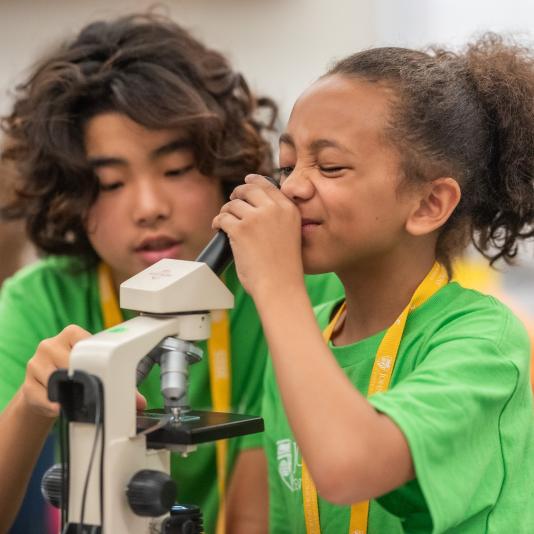
What can we learn from fossilized plants? What do biologists do as they study humans, plants, and animals? In this course, we'll answer these questions and others as we learn about different types of biology, the study of living things, and the job requirements of various biologists. We'll discover how to design and conduct experiments and participate in hands-on activities, such as a personal survey of our local ecosystems, to determine the diversity, abundance, and behavior of the different living organisms inhabiting the area, like an ecologist. We may also examine and compare various protists, like a microbiologist Time Commitment: 2-4 hours per week (90 minutes of synchronous class time, 1-2 hours of optional independent work per week). Course will include 6 sessions over 6 weeks.
Learning Objectives
- Explain the purpose and duties of various biologists and describe the processes, methods, and tools used to perform their jobs
- Describe the ways biologists help solve today's problems, including medical mysteries, agricultural issues, and environmental challenges
- Collect, organize, and analyze lab data in tables and graphs, looking for patterns and trends that defend a conclusion using evidence to support or refute the hypothesis
About Advanced Enrichment courses
These courses offer above-grade-level material that is presented in a novel context, explored with other advanced learners, and guided by a CTY educator to help prepare students for higher-order thinking and college-style academic challenges.
Requirements
CTY courses have grade-level requirements and most require minimum test scores. Some courses may also have prerequisites.
Identification DetailsDates and Tuition
It looks like there are no upcoming sections right now. Stay tuned for new dates!
Registration Fee and Financial Aid
Tuition and fees will be waived or reduced for students who qualify for financial aid.
Learn more about Financial Aid